When Calm Feels Uncomfortable: Everyday Ways to Reconnect with Your Body and Regulate Your Nervous System (Part 4)

Welcome back to this 5 part series!
In Part 1, we explored what body dysregulation looks and feels like.
In Part 2, we began to understand the process of rebuilding safety from within.
In Part 3, we looked at how psychosomatic therapy helps rewire the mind-body connection and restore balance.
Now, let’s bring it home…and into your daily life.
Healing doesn’t just happen in therapy sessions or during quiet moments of reflection. It happens in the in-between: while you’re making coffee, sitting in traffic, cooking dinner, or scrolling your phone at night.
Every one of these moments is an opportunity to reconnect, to regulate, to breathe, to remind your body that you’re safe now.
Breathe...
Regulation Is a Practice, Not a Performance
You don’t have to “get it right” because there is no one right way to regulate. We are all different and our stories (our experiences), which are stored in our bodies, require different attention. Therefore, it would make sense that there is no one perfect way to calm your nervous system — only what works for your body at that moment.
Some days, you’ll want stillness. Other days, your system will need movement or expression. Your job is simply to listen and give give your body what it needs to feel safe again.
The following are gentle, body-based practices you can begin weaving into your day — each one a way to tell your nervous system, “I’m here. You’re safe.”
1. The Grounding Pause
Anytime you feel scattered, anxious, or disconnected — pause. Notice your feet on the floor. Let your attention drop down, like sand settling in water. Feel the weight of your body supported by the chair or ground beneath you.
Then ask yourself: What is one thing I can sense right now? Maybe it’s the texture of your sweater, the hum of a sound nearby, or the rhythm of your breath.
This moment of presence tells your body: It’s okay to come back.
2. Breath as a Bridge
Your breath is the most accessible tool you have to communicate safety to your nervous system. But you don’t need to force deep breathing, that can sometimes create more tension.
Try this instead:
Exhale first, slowly.
Then let the next inhale come naturally.
Pause briefly at the top, and exhale again, a little longer this time.
When your exhale is slightly longer than your inhale, it activates your parasympathetic system — the “rest and digest” response that brings calm by countering the "fight or flight" response of the sympathetic nervous system.
Even one minute of intentional breathing can shift your internal state.
3. Soothing Through Sensation
Your body speaks through sensation, so give it experiences that feel safe and nurturing.
Try:
Wrapping yourself in a soft blanket or a weighted blanket
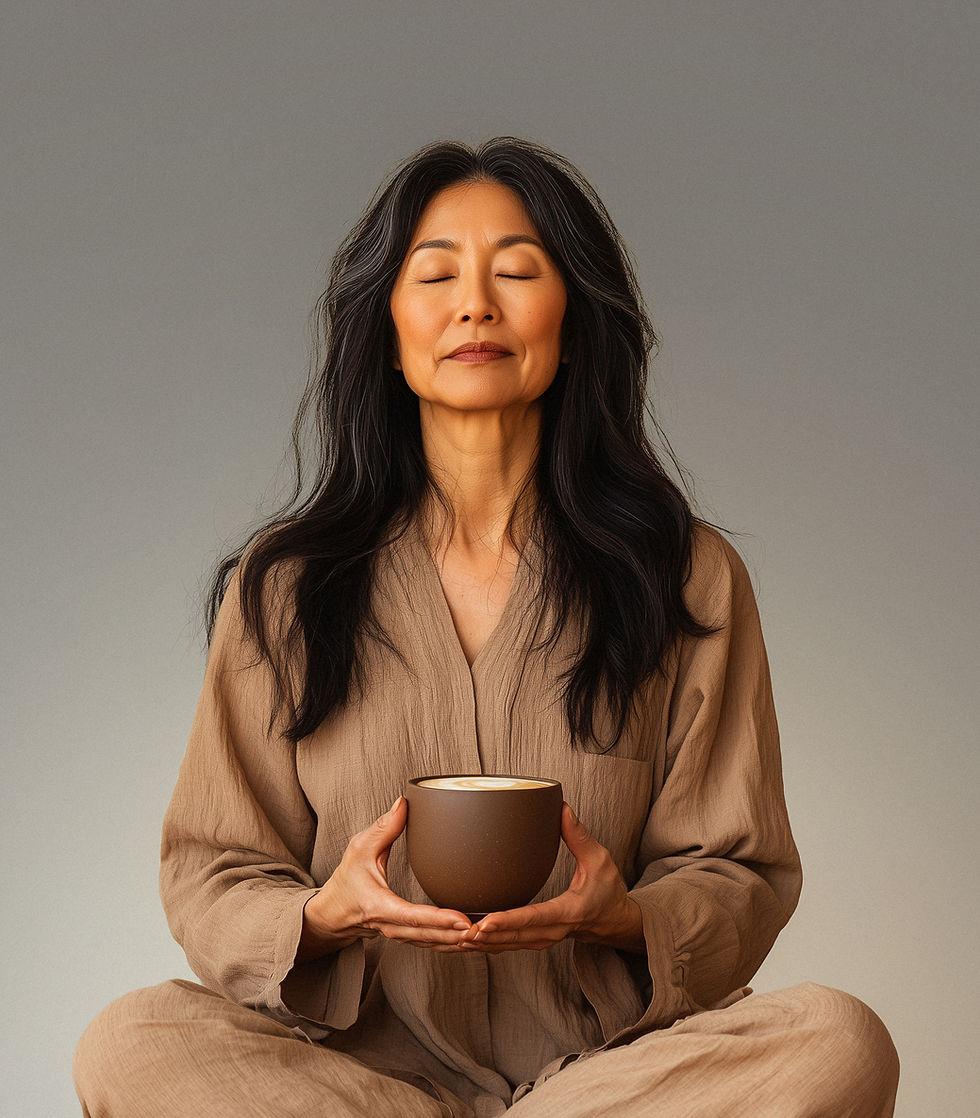
Holding a warm mug between your palms
Standing under the shower and focusing only on the water
Massaging your hands or temples
Each of these sends your body the message: I am safe enough to soften.
4. Micro-Movement Moments
Sometimes, regulation doesn’t come from stillness — it comes from movement.
When you feel wound up, anxious, or frozen, try:
Rolling your shoulders
Stretching your arms overhead
Shaking out your hands or legs
Walking slowly while focusing on your steps
Movement helps your body discharge stored energy and return to balance. It doesn’t have to be fancy, planned, hard, heavy,...it just has to be felt.
5. The Power of Co-Regulation
We are wired to regulate in relationship. This means that sometimes, the quickest way to soothe your nervous system isn’t through doing something alone. Try being with someone who feels safe.
That could look like:
Sitting beside a loved one in silence
Letting your pet rest on your lap
Talking to a friend who listens without fixing
Making eye contact with someone who feels kind and nonjudgemental
When we connect, our bodies sync. Calm is contagious.
6. Create “Micro-Moments” of Safety
Healing doesn’t require hour-long rituals. Start with tiny acts of regulation that you repeat throughout the day, every day. Consistency is key and helps to create new neuropathways in the brain.
Take three slow breaths before your first sip of coffee.
Place a hand on your heart when you park the car and whisper, “I’m here.”
Stretch your body between meetings or tasks.
Light a candle before bed and simply watch the flame for a minute.
These small rituals build a rhythm of safety. Over time, your nervous system begins to recognize these cues and naturally settles faster.
Healing in Daily Life
As you begin integrating these practices, notice how your body responds. Some days, it will feel easier. Other days, you may feel resistance, and even this is normal.
The goal isn’t to stay calm all the time; it’s to know how to find your way back.
When you meet your body with gentleness, you teach it that safety doesn’t mean perfection...it means presence.
A Gentle Reminder
You don’t need to rush this process. Every breath, every pause, every moment you choose awareness over autopilot — that’s healing.
You are retraining your system to trust again. To soften again. To belong to yourself again.
And, if you want to go deeper in understanding how your body, emotions, and mind work together, this is where psychosomatic therapy truly shines — guiding you through that process in a supported, relational way.
In Part 5, we’ll explore what embodied calm really feels like — how to recognize when your system is finally shifting, and how to sustain that sense of ease without fear that it will “go away.”
Because calm isn’t a fleeting state — it’s a relationship you build with yourself.And your body already knows the way.


Comments